Seasoning basics · September 17, 2026
Salt Happens
When, Why & How to Season
A pinch here, a taste there. Learn when to season, how to choose your salt, and when to hold back.
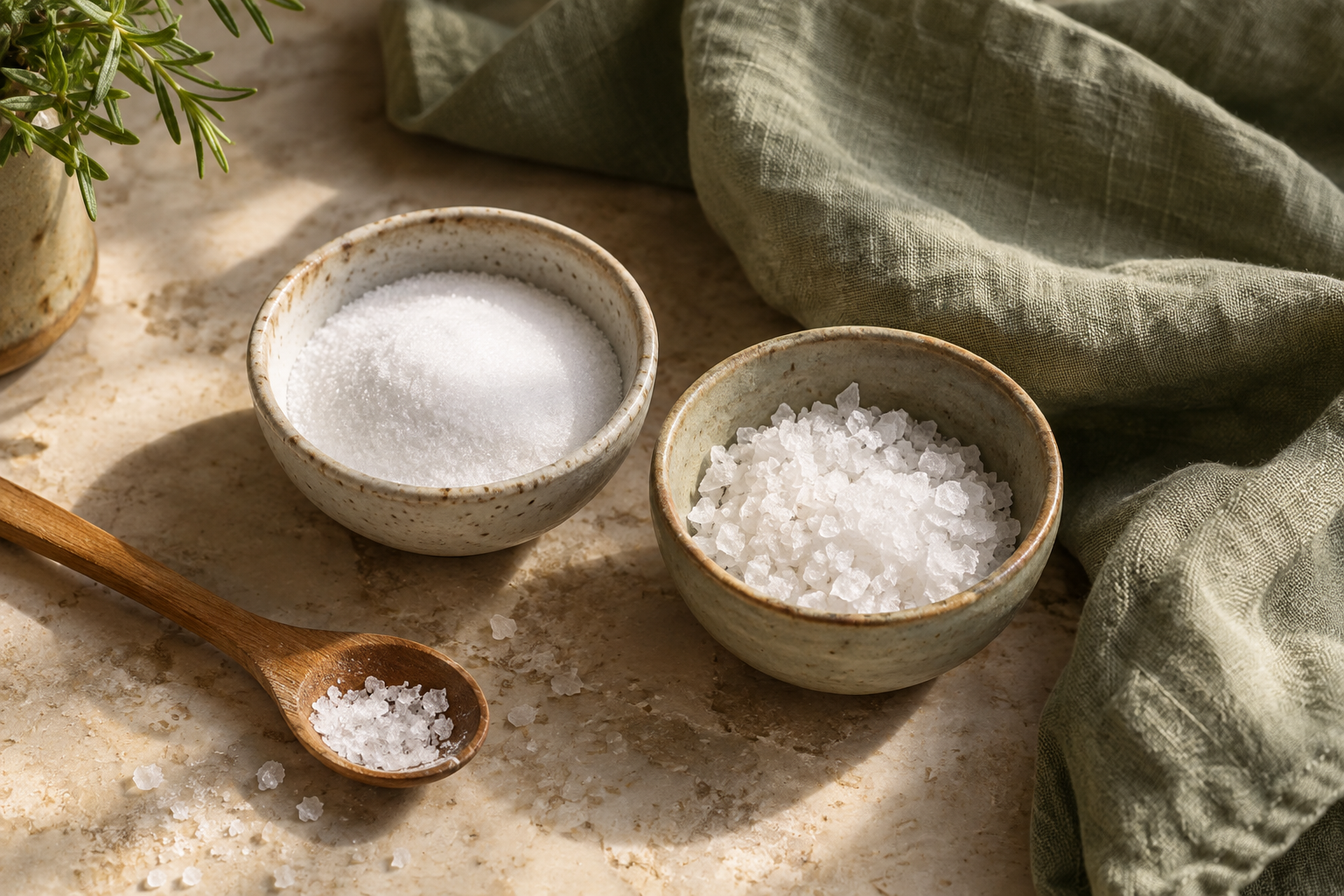
Season with a little intention.
Salt can help a dish taste more like itself. The aim is a flavorful bite, not a mouthful that announces, “Hello, I’m salt.” Start modestly, stir well, and taste before adding more whenever the food is safe to taste.
When should it go in?
- Vegetables: add a small pinch as they cook, then check again before serving.
- Soups and sauces: season lightly at first. As liquid evaporates, the seasoning becomes more concentrated. Make your final adjustment after reducing.
- Meat: season before cooking. For advance salting, follow a recipe’s timing and keep the meat refrigerated. Don’t taste raw meat to check seasoning.
- Pasta: salt the cooking water before adding the pasta. If you’ll use that water in a sauce, remember that it brings salt with it.
- Baking: follow the recipe’s specified salt and amount; this isn’t the place to season by tasting raw batter.
Same spoon, different salt.
Fine table salt and larger kosher salt crystals pack differently into a teaspoon. Even kosher salt brands differ. Use the type named in the recipe, or measure by weight when a weight is given, rather than assuming equal spoonfuls are interchangeable.
Watch the other ingredients.
Bacon, broth, Parmesan, soy sauce, and seasoning blends may already bring plenty of salt. In corn chowder, taste a spoonful with a little bacon before deciding whether the whole pot needs more.
Further reading: Serious Eats’ guide to dry-brining.