Kitchen rescues · September 17, 2026
Golden, Not Gone
Saving a Too-Dark Sear
Browning brings flavor. Burning brings bitterness. Here’s how to change course before dinner gets away from you.
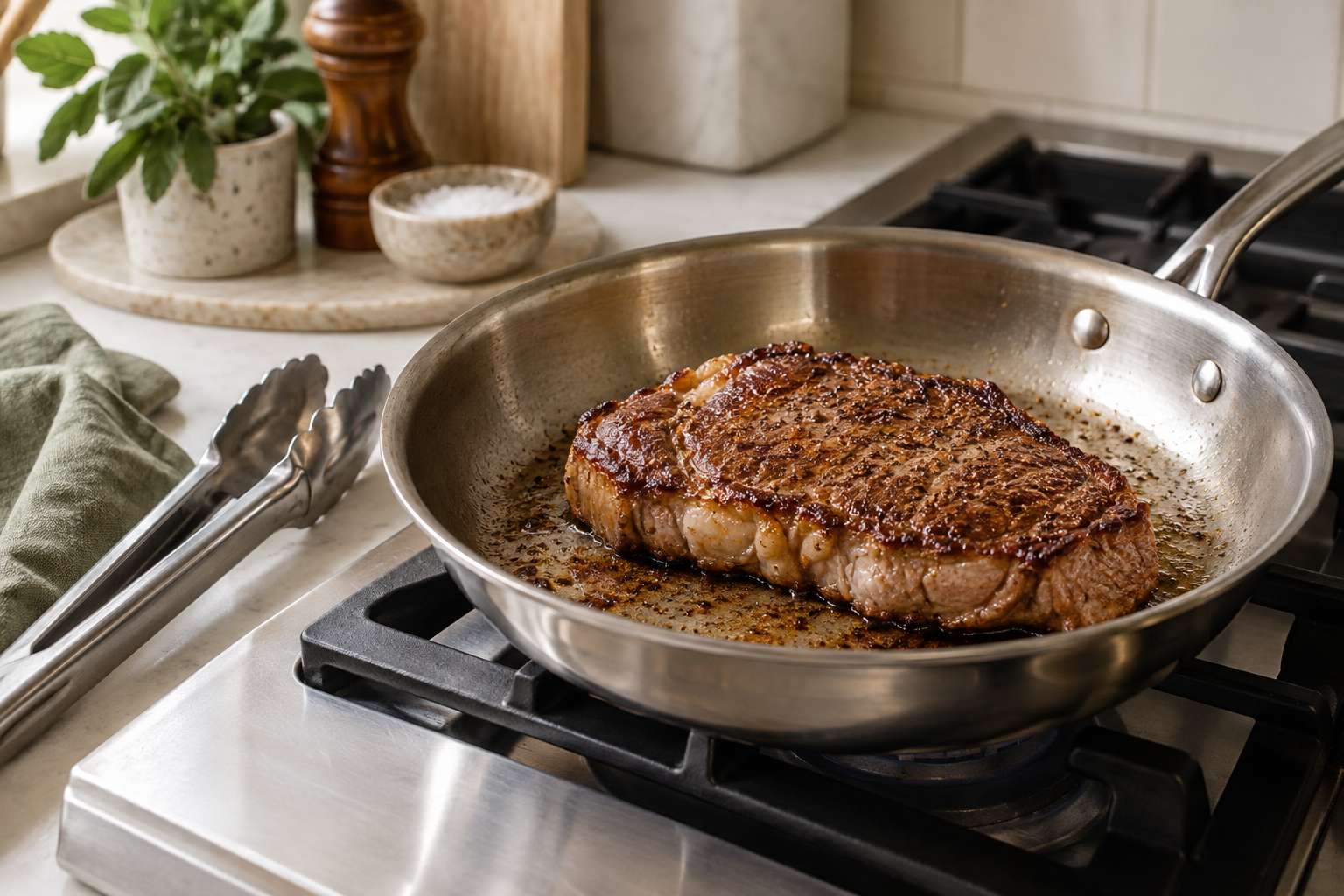
First, turn down the drama—and the heat.
If the outside is darkening too quickly, move the pan off the burner and transfer the meat to a clean plate. Check what’s happening before continuing. A dark crust doesn’t tell you whether the center is cooked.
Browned or burned?
A brown, savory-smelling crust is different from blackened patches with an acrid smell. A few charred grill marks can be intentional; a thick, bitter burned layer is not the same thing.
If the surface has only a small burned patch, carefully trim it away. If burning is extensive or the bitterness carries through the meat, a sauce won’t make it disappear.
Can butter save it?
Butter isn’t an eraser for burned meat. It can add richness, but it can also burn in an overheated pan. Loosening browned residue from a pan is a different job: that’s deglazing. Liquid such as stock or water releases the browned bits; butter can finish the resulting sauce. Burned residue should be discarded rather than stirred into dinner.
Give the rest a fresh start.
- Transfer salvageable meat out of the scorched pan.
- Use a clean pan and gentler heat to finish cooking if needed. Don’t pour liquid into smoking fat.
- Use a food thermometer and the appropriate target for your cut, rather than relying on crust color.
- Serve with a fresh sauce only after removing any burned portions. Sauce adds flavor; it doesn’t undo burning.
Further reading: Serious Eats on pan sauces and burned butter.